How to remember the cranial nerves in order
The twelve cranial nerves, I to XII, are olfactory, optic, oculomotor, trochlear, trigeminal, abducens, facial, vestibulocochlear, glossopharyngeal, vagus, accessory and hypoglossal. Put I to X on your body from your feet up, and XI and XII on the first two stops of a second place you know.
- OLFACTORYI: smellFeet
- OPTICII: sightKnees
- OCULOMOTORIII: most eye movements, the pupil and the eyelidThighs
- TROCHLEARIV: turns the eye down and inHips
- TRIGEMINALV: feeling in the face, and chewingStomach
- ABDUCENSVI: turns the eye outwardsChest
- FACIALVII: facial expression, and taste at the front of the tongueShoulders
- VESTIBULOCOCHLEARVIII: hearing and balanceNeck
- GLOSSOPHARYNGEALIX: taste at the back of the tongue, and swallowingFace
- VAGUSX: the throat, heart, lungs and gutTop of head
- ACCESSORYXI: shrugging the shoulders and turning the headStop 1
- HYPOGLOSSALXII: moves the tongueStop 2
Try it: the first ten on your body
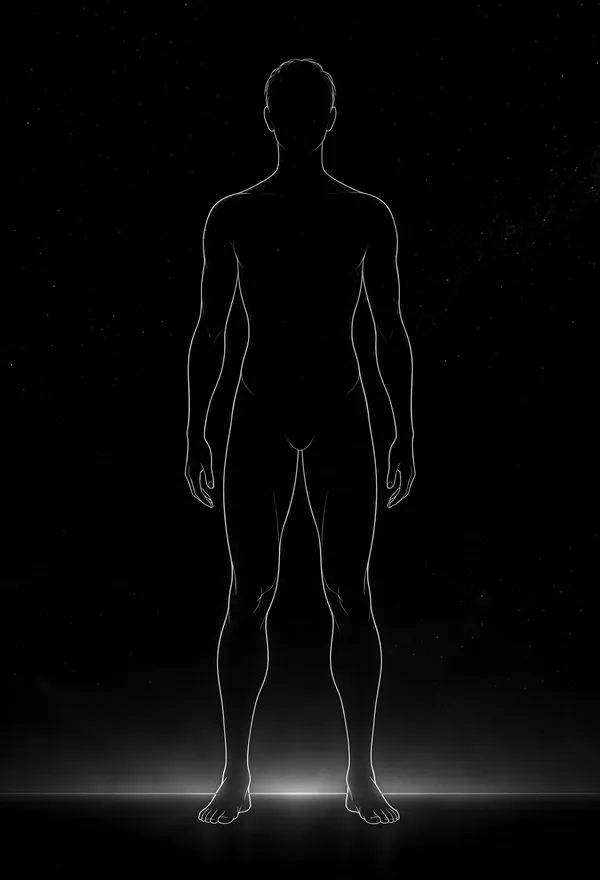
Ten words, one at a time, each on a part of your body: feet, knees, thighs, hips, stomach, chest, shoulders, neck, face, the top of your head. For each, type what the word does to that part, in a few words; the first two come with a scene to start you off. Up to 15 seconds a word. Then look away for 15 seconds, and walk up your body from your feet to get them back.
Look away.
15seconds
Then walk up your body from your feet to the top of your head.
The free lesson does ten words your own way, then ten in your first memory palace, feet to head, with the same time per word, so you can compare. The next day it checks both lists again.
Where does the order slip?
Trochlear (IV) and trigeminal (V) both start with TR: the trochlear is the smallest of the twelve, and comes first. The three nerves that move the eye aren’t side by side: they are III, IV and VI. Older books call VIII the auditory or acoustic nerve.
How do you learn more than ten?
Your body holds ten. For 11 onwards, take a place you know well, such as your home, and choose ten stops in the order you walk through it, starting at the front door. Each place holds ten, and it joins on after the top of your head, so the walk runs on from 10 to 11 without a break.
Learn ten at a time, and walk the earlier tens again from memory before you add the next.
How do you keep it?
Walk up your body again tomorrow and a few days later, and say each item before you look. Recalling something before you look at it again is one of the best-supported ways to learn. If an item doesn’t come back, give it a new scene in the same spot.
In a 2022 study, ten parts of the body, typed from feet to head, worked as well as a classical memory palace for recalling a list in order. There’s more in how to memorize a list in order and the body method.
Keep this list with Without Notes
After the free first lesson, paste this list into Without Notes. It puts the items on your places in order, you write each scene, and it checks you at 1, 7 and 30 days, unaided.
Sources
- OpenStax Anatomy and Physiology 2e, 13.4: The peripheral nervous system
- Cleveland Clinic: cranial nerves
- Kluger et al. 2022, Memory: ten body parts against a classical memory palace
- Yang et al. 2021, Psychological Bulletin: recall practice in 222 classroom studies
Without Notes is a study tool. It does not diagnose or treat memory problems. If you’ve noticed changes in your memory that worry you, please talk to a doctor first.