About Without Notes
The oldest memory method, on places you already know.
Without Notes is a memorisation app for your own material: put what you need to remember on places you already know, starting with your own body, and see what you still remember at 1, 7 and 30 days.
We made it because rereading your notes feels like learning, and nothing tells you what you’ll recall once the page is gone. People have used places to hold things in order for more than 2,000 years. Without Notes puts that method to work on what you’re learning now, and a day, a week and a month later shows you what you still know.
Who it’s for
People with something specific to know by heart, often by a date: an exam syllabus, the points of a talk, a pitch, a product range, the steps of a process. You bring the material and learn it in order. Set the day it’s for, and your walks come closer together as it nears.
It helps less with skills you have to perform and with things you’d look up anyway. It holds what you put in it, and won’t improve your memory in general. It’s a study tool, and it can’t diagnose or treat memory problems.
Seven decisions behind it
It tests you first.
Before it teaches you anything, the first lesson asks how many of ten words you can remember your own way. Then you learn the method and try ten more, with the same time per word and the same test. You see both scores side by side, each with the time its round took.
It starts on your own body.
Your first ten places are parts of your body, feet to head, so there’s nothing to build before you begin. In a 2022 study, ten parts of the body, typed from feet to head, worked as well as a classical memory palace for recalling a list in order (221 people, repeated with 147 more). After your body comes a route you walk anyway, then rooms.
You write every scene.
A scene is one short sentence in which the thing you’re learning does something to its place. You write each one yourself. If you can see it in your head, good; if not, the words still work.
Every score is your own.
We never show someone else’s results as what you’ll get. Each score comes from your own lists and says how it was made: from memory, on which day, after how many walks. A word you needed a hint for doesn’t count as remembered.
No daily streak, points or hearts.
There’s nothing to protect, and a day off costs you nothing. What lights up is a star, when you remember the thing on its place.
Walks, checks and export are free for good.
Going over what you’ve learned, the checks at 1, 7 and 30 days and downloading a copy of all your data stay free whether or not you pay. Paying covers adding more and the later lessons, at the prices on the home page.
No offer on your first day, unless you go past a free limit.
The first time an offer opens by itself is after the next day’s check, once you have a number of your own from a day later.
How the pictures are made
The drawn rooms, the figure and the other pictures on this site are made with image models from OpenAI and Google, under a written style guide. A person looks at each one and chooses it before it’s used. That’s what “Illustrated for Without Notes” at the foot of these pages means.
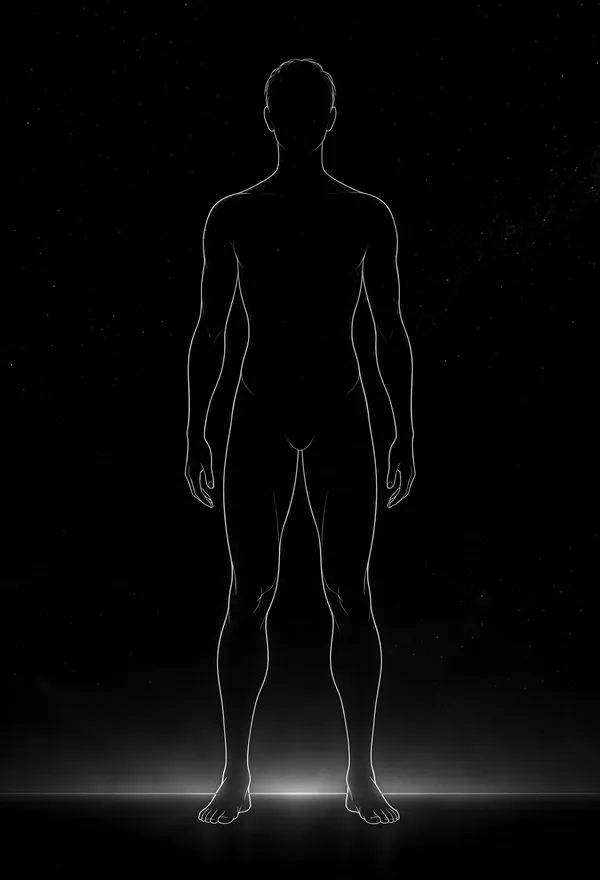
Everything that shows what you remembered, the stars and the lines between them included, is drawn in code.
With full access, each scene you write is also drawn as a picture by AI, and labelled as an AI illustration. Only the scene’s sentence goes to OpenAI, without your name or email, and OpenAI doesn’t train on it. Pictures are on unless you switch off “Your scene, illustrated” on your account page.
Nothing else you type or add goes to an AI. When you add your own material, a set of fixed rules suggests a way to learn each thing: places, cards or the people list. The details are in the privacy notice.
The evidence, in brief
The memory palace on its own has less evidence behind it than its fans suggest. For young adults the measured advantage is small and uncertain (Ondřej, 2025, a review of 85 experiments).
Recalling something before you look at it again is one of the best-supported ways to learn (Yang and colleagues, 2021), and spreading those recalls over several days works better than packing them into one sitting (Mawson and Kang, 2025). So every walk asks you to recall before it shows you anything, and the checks are spread over days.
Each study we rely on, with what it found, is under What we can show you on the home page. The guides go further into the method and where it comes from.
Who makes it
We’re the Without Notes team at BD Nova UG (haftungsbeschränkt), a company registered in Germany. The address and register details are in the legal notice.
For a question or a problem, write to support@withoutnotes.com. If the first lesson lost you somewhere, we’d like to hear where.
The hand at every fifth place
From lesson 3, a small pointing hand marks every fifth place, so you can count your way along without starting from the top. The idea is in the Rhetorica ad Herennium, a Roman handbook for speakers from the 80s BC and the oldest full description of the method. It tells students to mark every fifth place with a golden hand. Ours is a plain line, because gold in the app means something you remembered.
For six centuries or more, readers drew a small pointing hand in the margin beside a passage worth noting. It may have been the most common mark readers made. Petrarch and Boccaccio drew their own (Sherman, 2005).