How to memorize for exams
On this page
- Try it: five topics of a paper on your body
- What is the best way to memorize for an exam?
- Why doesn’t rereading your notes work?
- How to revise for an exam, step by step
- Which exam material suits a memory palace?
- What if the exam is tomorrow?
- Did students ever use memory palaces for exams?
- Revise for your exam with Without Notes
- Questions
To memorize for an exam, test yourself on the material before you look at your notes, and do it again over several days. Write out what you remember on a blank page, check it, and come back to the gaps the next day. For anything that has an order, such as the topics of a paper or the steps of a process, put one item on each of a set of places you already know.
Rereading and highlighting feel like work, and they never show you what you would remember in the exam room. Try five topics of a biology paper on your body below.
Try it: five topics of a paper on your body
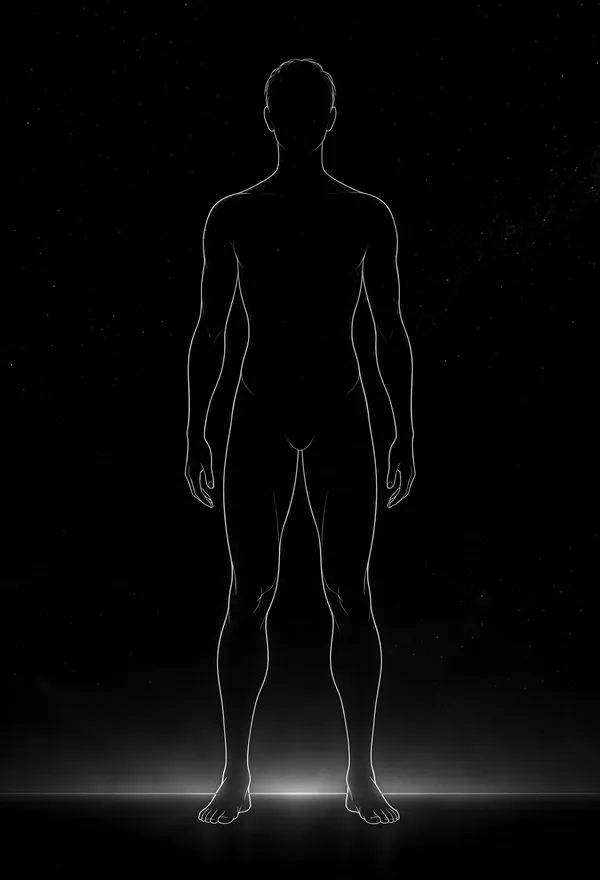
Five words, one at a time, each on a part of your body: feet, knees, hips, chest, the top of your head. For each, type what the word does to that part, in a few words. Up to 15 seconds a word. Then look away for 15 seconds, and walk up your body from your feet to get them back.
The words: CELLS, ENZYMES, DIGESTION, LUNGS, HEART.
Something has to happen to the part, and a few plain words will do: “The CELLS squash your feet.”
Look away.
15seconds
Then walk up your body from your feet to the top of your head.
The free lesson does ten words your own way, then ten on your body, with the same time per word, so you can compare. The next day it checks both lists again.
What is the best way to memorize for an exam?
Practise remembering it. Recalling something before you look at it again is one of the best-supported ways to learn, across 222 classroom studies. Spreading those recalls over several days works better than packing them into one sitting.
A blank page is the simplest test. Write the heading of a topic, close your notes and write down everything you can. Then open the notes and mark what you left out. The marked parts are what you study next.
Why doesn’t rereading your notes work?
It works a little, and it feels better than it is. When the page is in front of you, everything on it looks familiar, so it seems learned. The exam asks you to produce it with the page gone, and only a recall attempt shows you whether you can. A try that comes back empty, followed by the answer, still helps.
How to revise for an exam, step by step
- List the topics from the syllabus or past papers, in the order they are taught.
- Sort what you need into two kinds. Things with an order, such as the topics of a paper, the stages of a process or the plan of an essay, go on places. Single facts, such as a definition, a date or a formula, go on cards with the question on one side.
- Put the topics on places you know, one per place. Your body is the quickest: feet, knees, thighs, hips, stomach, chest, shoulders, neck, face, top of head. Make each topic do something to its place: “The ENZYMES chew through your knees.”
- Start every revision sitting by walking the places from memory and writing out what you know on each topic. Open the notes only after that.
- Come back the next day, a few days later and a week later. Each time, start from memory.
- In the last week, do whole papers from memory under time, and walk the topics once a day.
Which exam material suits a memory palace?
Material where the order matters: the topics of a paper, so you can check in the exam that you haven’t left one out; the stages of a process; the causes of an event in the order you want to write them; and the plan of an essay you expect to write. In a 2022 study, ten parts of the body worked as well as a classical memory palace for recalling a list in order.
It helps less with understanding, which comes from working problems and explaining the topic in your own words, and with formulas, which you learn by using them. On its own, the memory palace gives young adults a small and uncertain advantage, according to a 2025 review of 85 experiments. Most of the gain in revision comes from the recall and the days in between, and the places give that recall an order to follow.
What if the exam is tomorrow?
Spend the evening recalling. Put the paper’s topics on your body tonight, walk them, and for each topic write out what you know before you check. Go over the gaps, then sleep. In the morning, walk the topics once more from memory before you look at anything. In the exam, walk your body before you start, and jot the topics on the first page so you can see which questions you can answer.
Did students ever use memory palaces for exams?
In 1596 Matteo Ricci, an Italian Jesuit living in Nanchang, wrote a book on memory palaces in Chinese for the governor of Jiangxi and his three sons, who were preparing for the imperial examinations. The sons did well, the historian Jonathan Spence writes, apparently through ordinary study and recitation.
Revise for your exam with Without Notes
Without Notes has a track for exams. You paste your topics, and it suggests places for the ones in order and cards for “term: definition” pairs. You write each scene yourself. When you set the date of the exam, it plans your walks and checks up to that day. Every check asks before it shows you anything, as the exam will.
Questions
How long before an exam should I start?
Early enough to come back to each topic on several different days. A few days will do for one paper; a whole syllabus needs weeks.
How many topics can I put on my body?
Ten. For a longer syllabus, give each paper or chapter its own set of places, such as a walk you take every day or the rooms of your home, and keep each set in a fixed order.
Should I use flashcards or a memory palace?
Both, for different things. Cards suit single facts that stand alone. Places suit anything with an order, because a deck of cards has none.
Sources
- Yang et al. 2021, Psychological Bulletin: recall practice in 222 classroom studies
- Mawson and Kang 2025, Behavioral Sciences: spacing in classrooms
- Kornell, Klein and Rawson 2015, JEP: Learning, Memory, and Cognition: an empty try, then the answer
- Kluger et al. 2022, Memory: ten body parts against a classical memory palace
- Ondřej 2025, British Journal of Psychology: the method of loci, a meta-analysis
- Spence 1984, The Memory Palace of Matteo Ricci, chapter 1
Without Notes is a study tool. It does not diagnose or treat memory problems. If you’ve noticed changes in your memory that worry you, please talk to a doctor first.