Know it by heart, in order. Without notes.

For your exam: start free with ten words on your own body. Then your topics, on places you already know. Tomorrow, see what you still remember.

Try the free lesson

No account needed.

How it worksOr try it with your own notes

The first lesson

What you’ll do

  1. Your wayTen words, one at a time. Remember them however you like, then type the ones you can.
  2. Your ten placesYou name ten parts of your body, from your feet to the top of your head, in your own words.
  3. On your bodyOne example and one untimed try, then ten new words, with the same time per word as the first ten. For each one, you type what it does to a part of your body.
  4. Both listsYou type the second list from memory, then see how many of each list you remembered.
Try the free lesson

The method

It starts on places you already know.

You already know the order of your own body, feet first and head last. The method uses that order. To remember a list, you put one thing on each part of your body by writing a short scene where the thing does something to it.

The ANCHOR smashes down onto your feet.
The word to remember is in capitals. The part you write is in red.
feetkneesthighshipsstomachchestshouldersneckfacetop of head
Ten parts of your body, feet to head. Use these, or name your own.

To recall the list, you start at your feet and work up, asking what’s on each part. When you remember something, its place lights up.

The word has to do something to the place.

A few plain words are enough, such as “The candle drips wax on your knees.” If you can see or feel it, good; if not, the words still work. In the study our first lesson is based on, how vividly people could imagine things made no difference.

Where places come from

  • Your body

    From the first lesson. Ten parts, nothing to set up, and it goes with you into the exam hall or the meeting.

  • A route you already walk

    The way to work or the walk to the station. A route runs one way, and its landmarks don’t repeat.

  • Your own places

    Your home or your office, in the order you walk through it, drawn as a map of your own.

A hairline Roman portico with five bays: a bench, a tall vase, a bust, an urn in an arched niche and a sundial.

People have used places this way for more than two thousand years. A Roman handbook for speakers, the Rhetorica ad Herennium, describes the method in the 80s BC. It tells students to mark every fifth place with a golden hand.

In Without Notes, a place turns gold only when you remember what’s on it.

Try the free lesson

After today

Then see what you still remember.

  1. Today

    Two scores, one for each way. Then, if you like, five of your own things on a walk you know.

  2. Tomorrow

    A short check of both lists, from memory. It opens on the same phone or computer, or comes by email at the time you pick.

  3. Day 7

    The same check, a week later.

  4. Day 30

    A last one a month later, if you want it.

Every number says how it was made: from memory, on which day, after how many walks. There’s no daily goal to keep up.

With full access

Your scenes, drawn.

Each scene is drawn as you add it. When the last one is in, the place plays back, each picture where you put it, with your own sentence under it. After you remember a thing on a walk, its picture shows again, on any phone or computer you sign in on. Up to 60 a month, 10 a day.

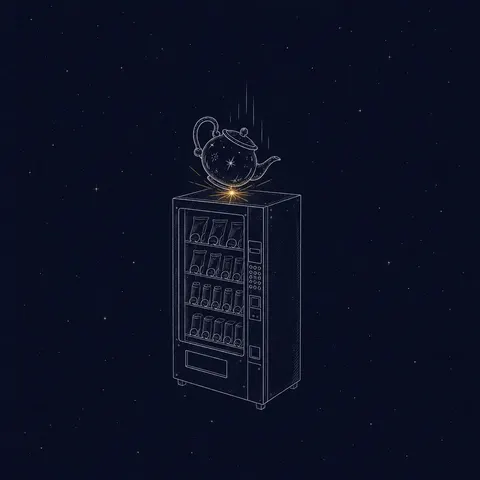
  • An AI illustration of “The TEAPOT lands on the vending machine.”The TEAPOT lands on the vending machine.
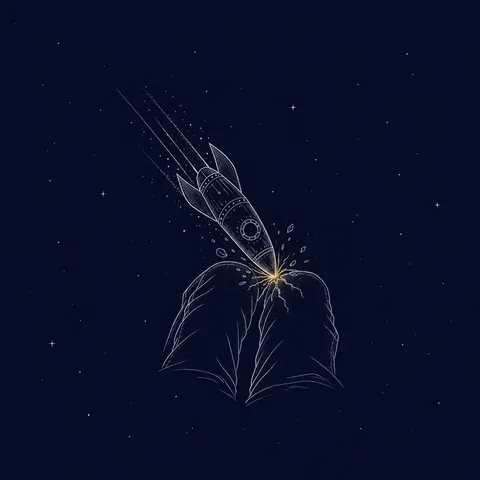
  • An AI illustration of “The ROCKET crashes through your knees.”The ROCKET crashes through your knees.
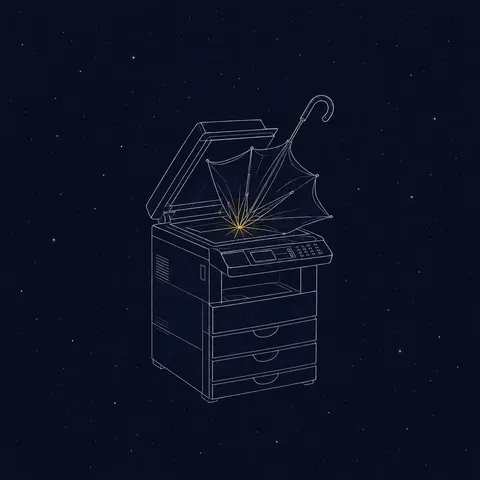
  • An AI illustration of “The UMBRELLA snaps open and jams the photocopier.”The UMBRELLA snaps open and jams the photocopier.

These are examples: each is an AI illustration of the sentence under it, in the app’s own style. Only the sentence is sent to OpenAI, which draws it, and only for people 18 and over who switch pictures on.

Your own material

Then use it on what you need to remember.

After the first lesson, paste or type your own points, numbers, words or names, and Without Notes suggests a way to learn each, with a line on why.

  • Places, and cards

    An exam or a course

    Your topic list or the steps of a process go on places, in order. Terms and definitions become cards that ask you first and show the answer after.

  • Places, in order

    A talk

    One key word for each point in your outline, one point to a place, so the whole talk has an order you can walk.

  • Places, and number cards

    A pitch or a negotiation

    Your opening, your reasons and your answers to the objections you expect, in order. Numbers are harder, so each figure gets a card of its own.

  • Cards, both ways

    Sales and product knowledge

    Product lines, specs and the objections you hear every week, checked from the question to the answer and back.

  • Cards, both ways

    A language

    Your own word list, asked both ways: one now, the other in tomorrow’s check.

  • The people list

    Names

    A name and a short note on who they are. Say it once, link it to something, then see the note and type the name. Names get a list of their own and don’t go on your body.

It helps less with skills you have to perform and with things you’d look up anyway. It holds what you put in it, and won’t improve your memory in general.

Evidence

What we can show you

Your own numbers

The first lesson gives you two scores, one for each way, from the same test with the same time per word, and shows how long each round took. Tomorrow’s check shows what’s left of both lists a day later. Every number Without Notes shows you comes from your own lists, and says how many walks you’ve had.

What we won’t claim

We make no promises about your brain, and we won’t quote a percentage from someone else’s study. Once enough people have done the first lesson, including a group that takes the first round twice before learning the method, we’ll publish the combined results here, along with how we got them.

What the research supports

  1. Ten parts of the body, typed from feet to head, worked as well as a classical memory palace for recalling a list in order.

    Kluger and colleagues, 2022, 221 people, repeated with 147 more

  2. Recalling something before you look at it again is one of the best-supported ways to learn.

    Yang and colleagues, 2021, a review of 222 classroom studies

  3. Spreading those recalls over several days works better than packing them into one sitting.

    Mawson and Kang, 2025, a review of 22 classroom studies

  4. At a real social event, practising recall of names beat a picture trick.

    Morris and colleagues, 2005

  5. The memory palace on its own has less evidence behind it than its fans suggest. For young adults the measured advantage is small and uncertain.

    Ondřej, 2025, a review of 85 experiments

    That’s why every walk in Without Notes asks you to recall before it shows you anything, and why the checks are spread over days.

Try the free lesson

Price

What it costs

Billing is the most common complaint in one- and two-star reviews of memory apps, so here are our rules.

Free

$0

Every tool, for up to 10 of your own things.

  • The first three lessons
  • Your body’s ten places
  • Up to 10 of your own things, on places or cards, for as many talks, exams and lists as you like
  • A people list of up to 15 names
  • Every walk, check and export

Full access

$49.99 a year

Renews each year until you cancel. Or $14.99 for 90 days, and then it ends. €49.99 or €14.99 in the EU, VAT included.

  • As many of your own things as you need past the free 10, on places and cards
  • Lessons 4 to 10
  • Every room we draw while your access runs
  • Downloads drawn from your places, and your own photos on your walks
  • AI pictures of your own scenes, up to 60 a month and 10 a day

You can buy full access from your lessons page once you’ve done the free first lesson.

The billing rules

  1. Only the yearly full access renews, and we say so before you buy. We email you 35 days and 7 days before each renewal, and you can cancel in one tap at any time.
  2. No free trial that turns into a charge. You can use the free tier for as long as you like.
  3. No coins, hearts, gems or credits, and nothing sold inside a lesson.
  4. Anything you add stays yours to walk, check and export for as long as we run Without Notes, whether you pay or not.
  5. A full refund within 14 days, whatever the reason.
  6. Prices in euros include VAT. In the US, sales tax is added where it applies.
  7. In the EU, the EEA and the UK you can withdraw within 14 days and get everything back. Withdraw from contract here.
Try the free lesson

Questions

Questions people ask

Is it free?

The first three lessons are free, and so is every tool, for up to 10 of your own things and 15 names. Walks, checks and exports stay free. Full access removes the limits.

Do I need an account?

Not for the first lesson, and not for tomorrow’s check, which opens on the same phone or computer. At the end of the lesson you can give your email to get the check by email, and then sign in on any device.

What if I can’t picture things in my head?

You don’t need to. In the study our first lesson is based on, how vividly people could imagine things made no difference. You make the word do something to the place, and write that as a short sentence.

Will this improve my memory in general?

No. It’s for the specific things you put in it: a list, a talk, your exam topics, the names from a meeting.

How long does it take?

We haven’t measured that with enough people yet, so we don’t give a time. If the words come too fast, you can ask for more time per word, and both rounds get the same slower pace.

What’s a memory palace, and why start with my body?

A memory palace is a set of places you know, in a fixed order, used to hold things you want to remember in that order. Without Notes starts with your body because it needs no setup, and a 2022 study found that ten parts of the body worked as well as a classical memory palace for recalling a list in order. After the first lesson, a walk you know, your own rooms or a drawn room can hold the next things.

What is it good for?

Anything with an order or a fixed list: exam topics, the points of a talk, the steps of a process, answers to objections, product lines, a set of words. It helps less with skills you have to perform, and with things you’d look up anyway.

Does it work for names?

Names work differently. At a real social event, practising recall of names beat a picture trick (Morris and colleagues, 2005). So names don’t go on your body. You add a name with a short note, then see the note and type the name, with a longer gap each time.

How does billing work?

Full access is $49.99 a year, renewing until you cancel, or $14.99 for 90 days. We email you 35 and 7 days before each renewal, and one tap cancels it. If you change your mind within 14 days, you get the full amount back.

What happens to what I type?

What you add and your scenes are stored so we can bring them back for your checks. We never sell them, and we never use them to train AI models.

Is the art made with AI?

Yes. The places and the figure are made with image models under a written style guide, and a person chooses each one before it’s used. The stars, the lines and everything that shows what you remembered are drawn in code.

Is there an app?

Without Notes runs in your phone’s browser. Versions for the app stores come later.

I’m worried about my memory. Is this for me?

If you’ve noticed changes in your memory that worry you, please talk to a doctor first. Without Notes is a study tool, and it can’t diagnose or treat anything. It’s made for keeping a list or a talk in your head, at any age.

Know it by heart, in order. Without notes.

Try the free lesson

Free. No account needed.